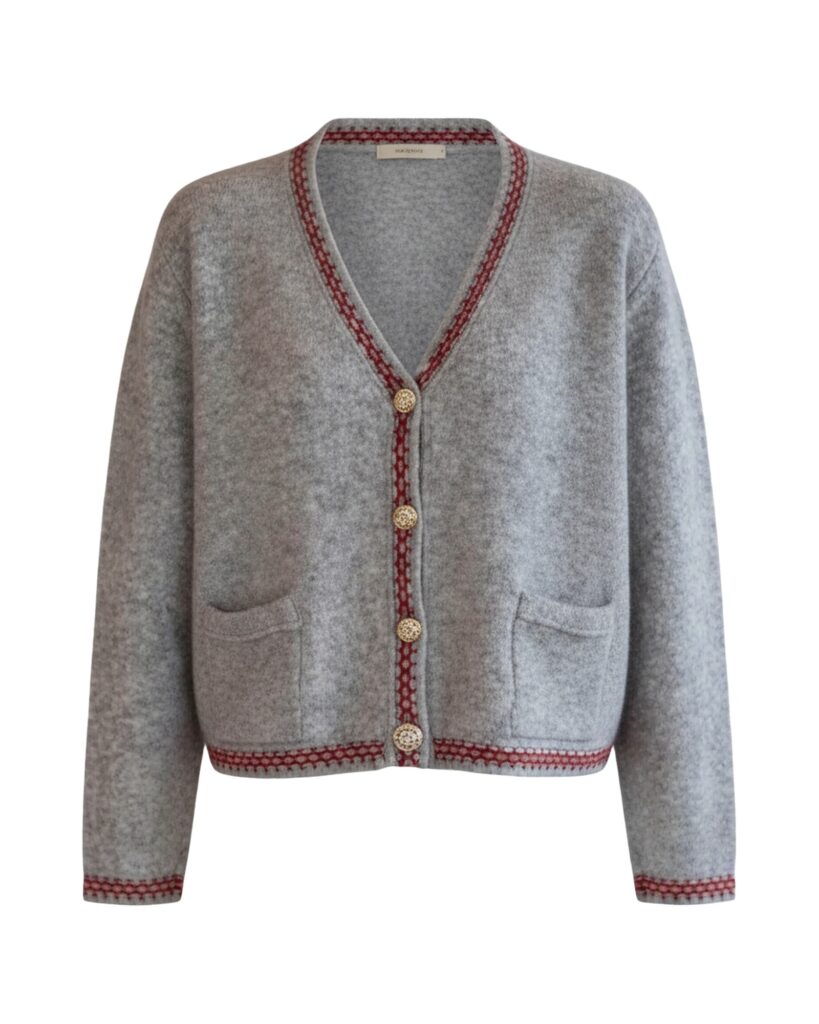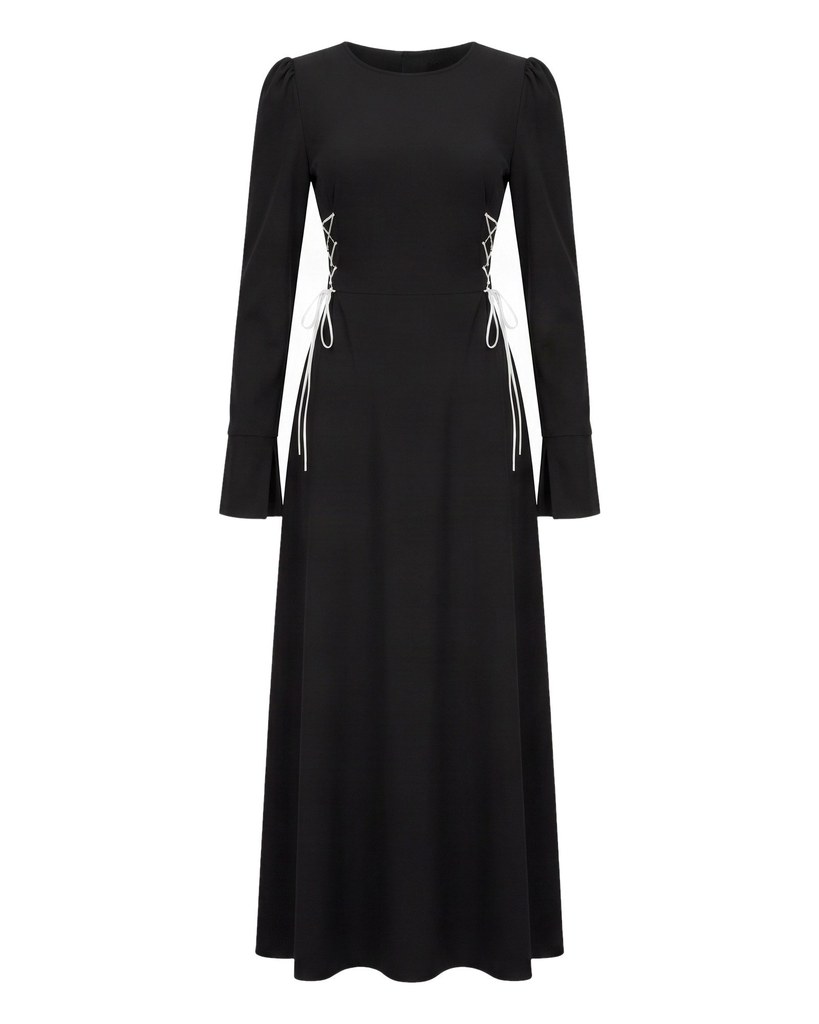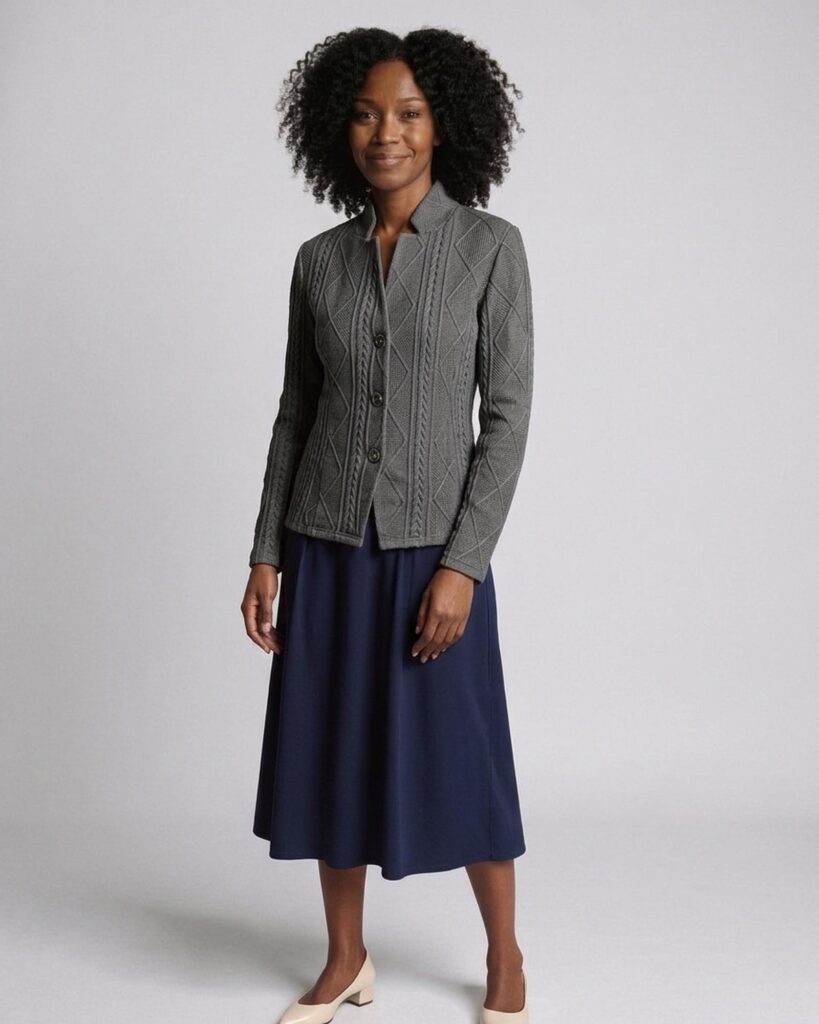
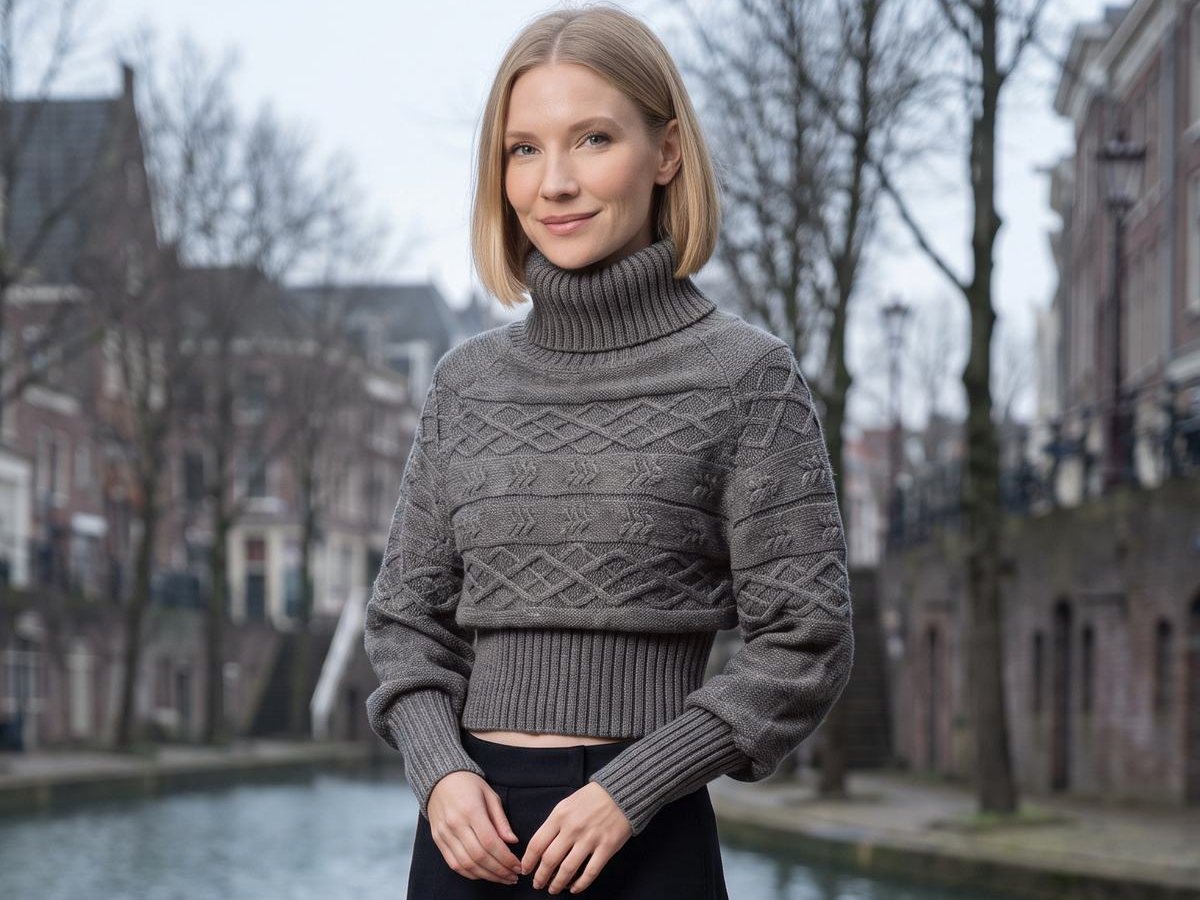
 Cardigans & jumpers
 Autumn looks
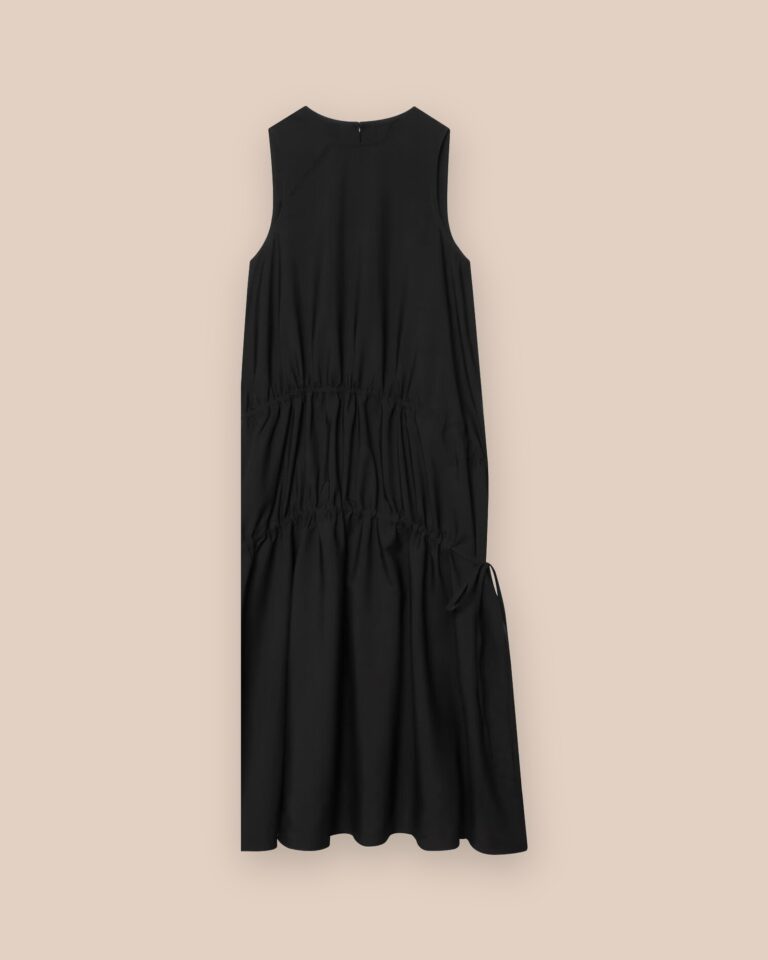 Kaat · Sleeveless tiered maxi dress
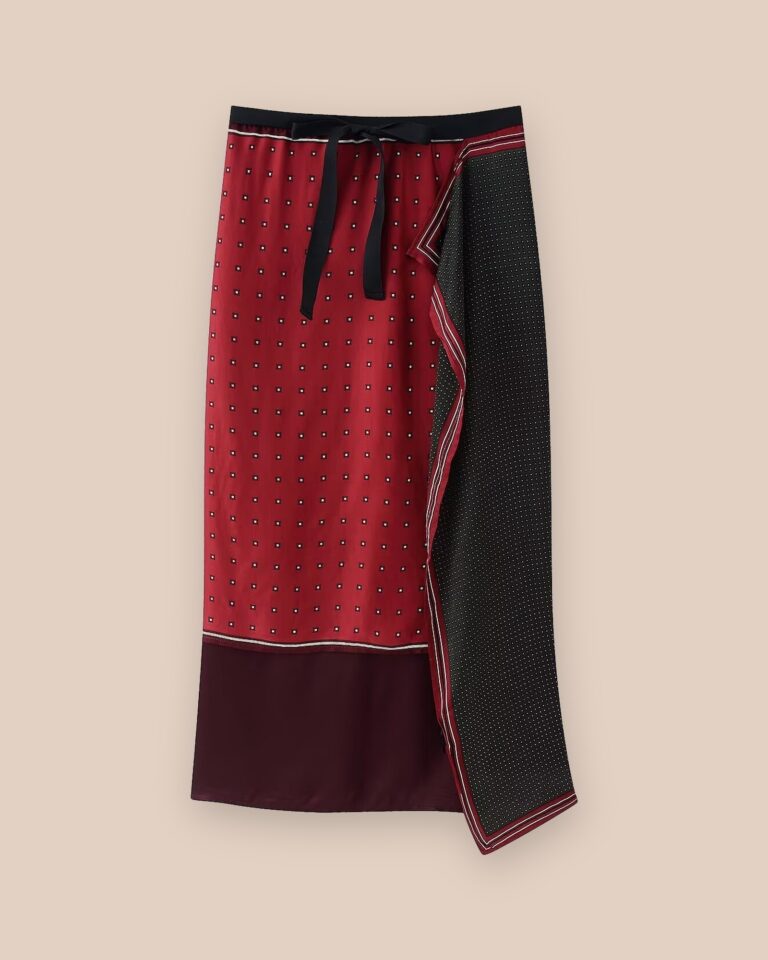 Nelleke · Printed long wrap skirt
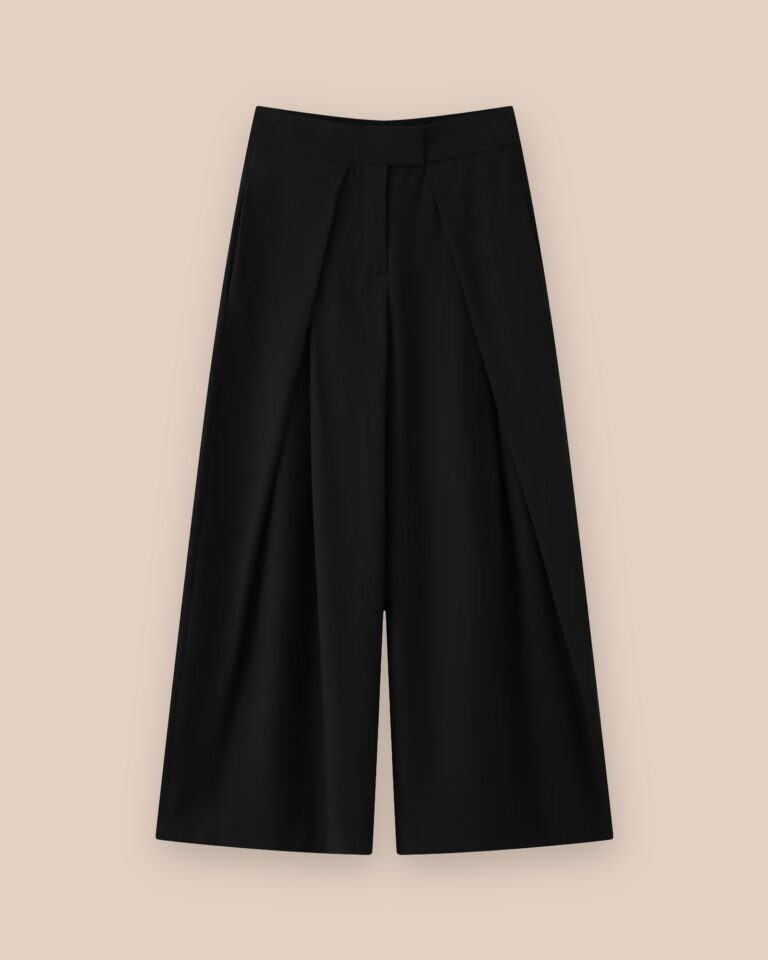 Dieuwke · Pleated wide-leg culottes
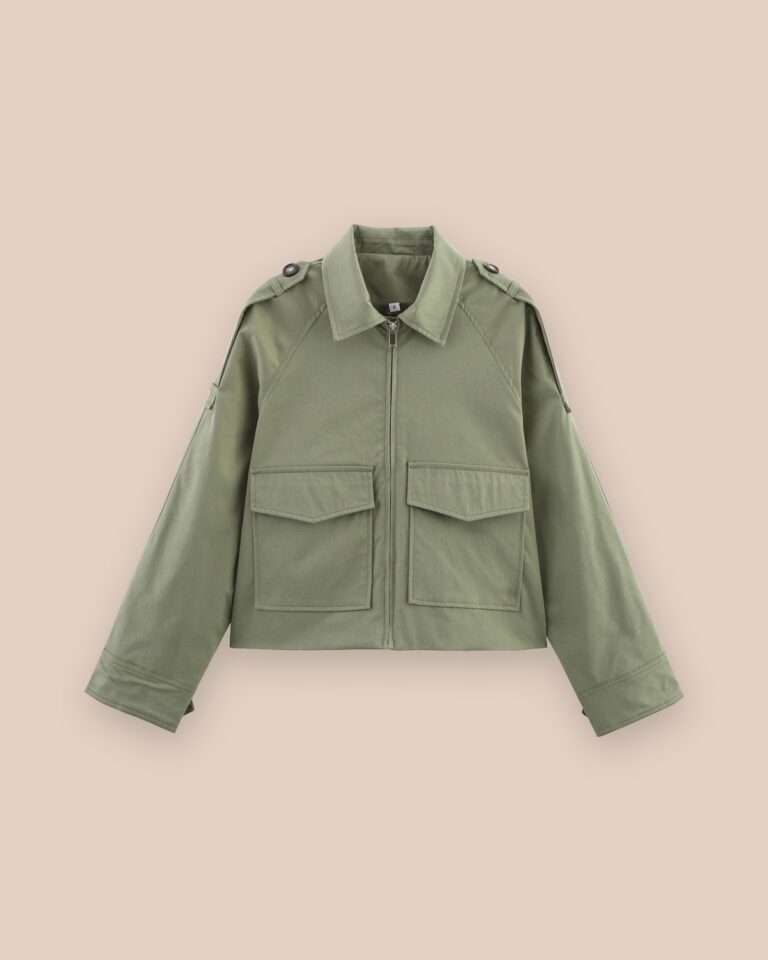 Ymke · Cropped zip jacket with flap pockets
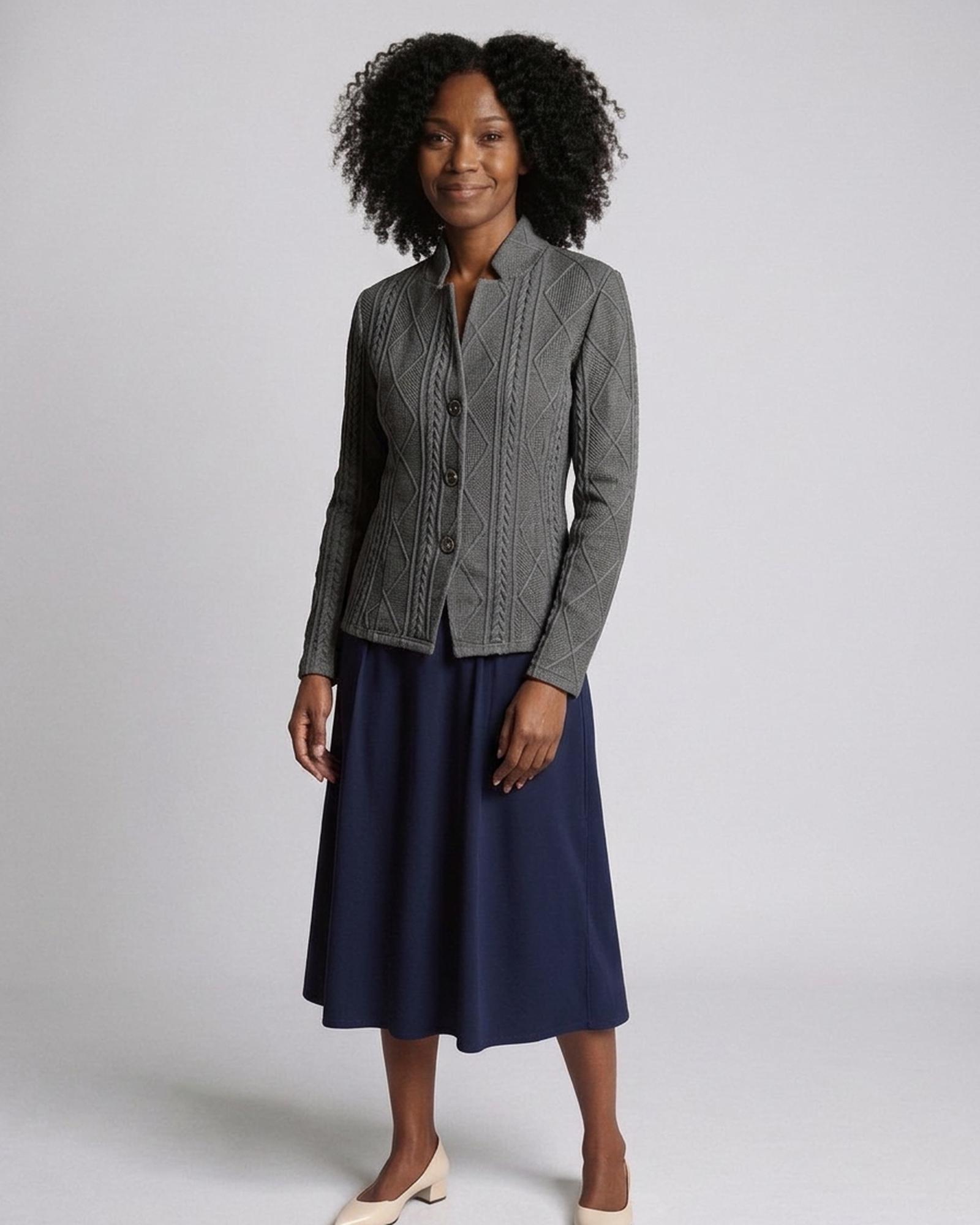
In short: blazers and coats are chosen on the shoulder first, the bust second and the sleeve length third. Measure your shoulder width across the back from seam to seam on a jacket that fits well, your bust at the fullest point and your arm from shoulder to wrist bone, then compare with the centimetre chart on the product page. Our blazers and coats are cut true to size, and relaxed and double-breasted styles already include room for a knit, so order your usual coat size; only size up for slim single-breasted styles if you plan to layer chunky knitwear every day.
Last verified: 18 October 2026 · Written by the Lumasana team
Why coat size is decided at the shoulder
Almost everything on a tailored jacket can be adjusted – the waist, the sleeve length, the hem – except the shoulder. If the shoulder seam sits where your shoulder ends, the whole garment hangs correctly: the lapels lie flat, the back has no pull lines, the sleeves fall straight. Too wide and the jacket looks borrowed; too narrow and it pulls across the back. So read a blazer or coat size chart shoulder first, bust second. This guide covers blazers, blazer-coats, tailored winter coats, cape coats, trench and teddy jackets; the logic is the same for all.
The measurements that decide your blazer and coat size
- Shoulder width: lay a blazer or coat that fits you well flat, buttoned, and measure across the back from the point where one sleeve joins the body to the other. This garment measurement is the one to compare with the chart.
- Bust: around the fullest part of your chest over the clothes you would normally wear under the jacket – a blouse for a blazer, a knit for a winter coat. That already builds in the layering room you need.
- Sleeve length: from the shoulder seam down the outside of the arm to the wrist bone, arm slightly bent. A blazer sleeve ends at the wrist bone and shows a little blouse cuff; a coat sleeve ends one to two centimetres lower to cover what is underneath.
- Back length: from the base of the neck to where you want the hem. Hip-length for blazers, knee or below for coats – the chart lists the total length so you know where it will end on you.
The general method for taking body measurements is in our Size guide.
Reading the chart and the fit status
Find the row where your shoulder width fits, then confirm the bust. If the shoulder fits one size and the bust the next size up, choose by the style: a relaxed or double-breasted cut has room across the bust and the shoulder size wins; a slim, fitted blazer does not and the bust size wins, with the shoulder then a touch wide – a tailor can take in the body but not the shoulder, so this is the right compromise. Next to the chart you see the fit status. Our blazers and coats are true to size: your usual coat size from the chart is the one to order. Where a style runs small, the status says so and you go one size up.
When to size up for layering – and when not to
The question we get most about coat size is whether to order a size larger to fit a jumper underneath. Usually not. Relaxed, oversized and double-breasted coats are cut with that room built in: four to eight centimetres of extra width at the bust compared with your body, which is the standard tailoring allowance for a knit layer. Cape coats have no fitted sleeves and take any knit. Slim single-breasted coats and fitted blazers are the exception: they are cut for a blouse or a fine jumper, so if you plan to wear chunky cable knits under a slim coat every day, choose one size up or, better, choose a relaxed style. Sizing up a fitted blazer for bust room gives you dropped shoulders and long sleeves, so size the shoulder and wear finer layers under it.
Blazer and coat size per style
Fitted and single-breasted blazers
Should close with one button without pulling at the bust, with the lapels lying flat. The hem ends at the hip. Sleeves show half a centimetre of blouse cuff. If two sizes both close, take the smaller for a tailored look.
Belted and double-breasted blazers
Cut with more ease across the body; the belt or the double row of buttons shapes the waist. Fit the shoulder and let the belt do the rest. These styles are usually worn fastened, so check that the fastened bust is comfortable when you sit.
Blazer-coats and longline coats
Longer and straighter; the shoulder and the sleeve length matter most, and the total length decides whether the coat ends at mid-thigh, knee or below. Check it against your height: a knee-length coat on a taller frame becomes a mid-thigh coat.
Tailored winter coats
Measure the bust over the knit you will wear most. Double-breasted and relaxed coats take a chunky knit in your usual size; slim coats take a fine one. The sleeve should cover the sleeve of your knit completely. Care for these coats – brushing and airing rather than washing – is in our Fabric care guide.
Trench, faux-leather and teddy jackets
Trench jackets are cut for layering over a blouse or fine knit and belt at the waist; size the shoulder. Faux-leather and faux-suede do not stretch, so make sure the bust is comfortable fastened. Teddy and fleece jackets are relaxed by design: your usual size, never smaller.
Checking the fit at home
Put the jacket on over the layer you will wear with it: fasten it and sit down – it should not pull at the button; reach forward – the back should not strain; raise your arms – the hem should not ride up much; and check in a mirror that the shoulder seam sits at the end of your shoulder. If the shoulder is right and only the sleeve is long, a tailor can shorten it; if the shoulder is wrong, return it within the 14-day cooling-off period that EU consumer law gives you (Your Europe) via our Returns & cancellation page and order the other size. European sizing standards (EN 13402, published by CEN) are built on the same body measurements used here. Browse the current styles in our Blazers and Coats & Jackets; for relaxed, deliberately roomy cuts read the Oversized fit explained.
Frequently asked questions about blazer and coat size
Should I buy a coat one size larger to wear a jumper underneath?
Usually not. Relaxed, oversized and double-breasted coats already include four to eight centimetres of layering room at the bust. Only slim single-breasted coats are cut for a blouse or fine knit; if you want chunky knits under one of those every day, go one size up or choose a relaxed style instead.
How do I measure my shoulder width for a blazer?
Lay a blazer that fits you well flat and buttoned, and measure across the back from the seam where one sleeve joins the body to the same seam on the other side. Compare this number with the shoulder width in the chart on the product page. It is the one measurement a tailor cannot change.
My shoulders fit one size and my bust another – which coat size do I choose?
For relaxed and double-breasted styles, choose the shoulder size: the body has room. For slim, fitted blazers choose the bust size and accept a slightly wider shoulder, because the body can be taken in by a tailor and the shoulder cannot. The fit status on the product page tells you which type the style is.
How long should a blazer sleeve be?
A blazer sleeve ends at the wrist bone and shows about half a centimetre of blouse cuff when your arms hang relaxed. A coat sleeve ends one to two centimetres lower so it covers the sleeve of the knit underneath. Shortening a sleeve is a simple alteration; lengthening is rarely possible.
Is a blazer-coat sized like a blazer or like a coat?
Like a coat: it is longer and cut to go over a knit, so measure your bust over the layer you will wear under it and check the total length against your height. The shoulder still comes first. Blazer-coats are usually worn open, so a comfortable bust when fastened is a bonus rather than a requirement.
Can a coat be altered if the size is slightly off?
Sleeves can be shortened and the body can be taken in at the side seams; a hem can be shortened. The shoulder cannot be moved and the body cannot be let out unless there is seam allowance. Fit the shoulder first and alter the rest; if the shoulder is wrong, exchange the size.
Read more