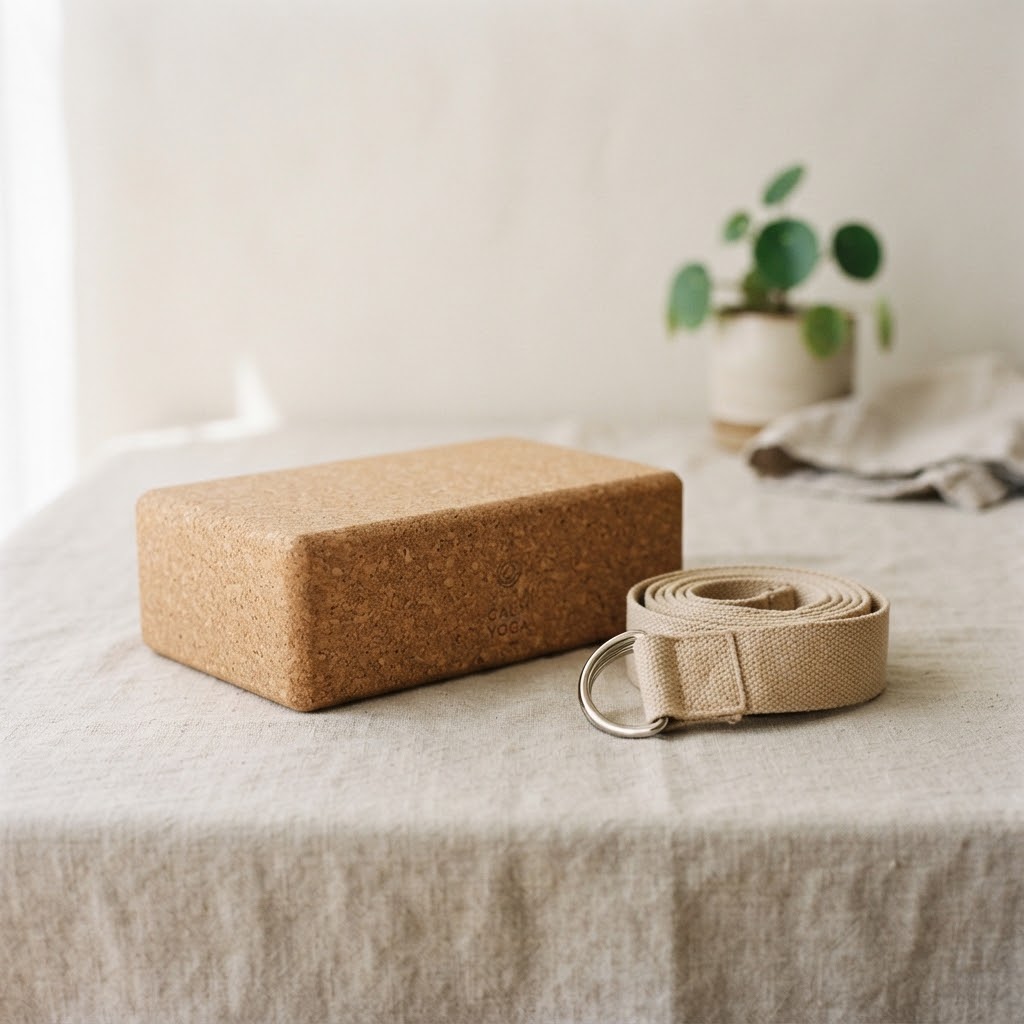
In short: Using a yoga block isn’t a sign you’re “not good enough yet” — it brings the floor closer to you, so you can build poses with a straight back and relaxed shoulders. Cork is the nicest material for this: firm, grippy and stable.
What is a yoga block actually for?
A block lengthens your arms and shortens the distance to the ground. That lets you hold the right shape in standing and seated poses without forcing. Advanced practitioners use blocks deliberately too: for extra height in hip openers, as support in balancing poses and to relax more deeply in restorative shapes. Firmness is everything — a block that gives way gives no confidence. That’s why we work with cork yoga blocks: they hold their shape, feel warm and don’t slide.
How to use a yoga block in five basic poses
- Standing forward fold: set the block on its tallest setting under your hands — so you keep your back long rather than rounded.
- Triangle pose: place the block beside your front foot and rest your lower hand on it; your chest stays open.
- Half moon: the block under your supporting hand gives the stability to truly extend your top leg.
- Seated poses and meditation: sitting on the edge of a flat block tilts your pelvis slightly forward — an instantly straighter back.
- Restorative bridge: slide the block under your sacrum and let your body settle for a few minutes.
Using a yoga block as a beginner: three tips
Start with two blocks — working evenly on the left and right feels more natural than shifting one block around. Choose one of the three heights (high, medium, low) deliberately per pose rather than guessing. And treat the block as a tool, not a stepping stone: the beginner routine in our knowledge base uses a block in every session. On a cork mat, block and mat grip against each other and nothing slides.
Ready to begin? Have a look at the Balance cork yoga block — and with 14-day returns you can calmly feel whether the size suits you.
Frequently asked questions about yoga blocks
Do I need one yoga block or two?
Two is nicest: many poses are symmetrical (both hands on a block) and you never have to shift a block mid-pose.
Cork or foam yoga block?
Cork is heavier and far more stable — it doesn't give way under pressure and doesn't slide. Foam is lighter for travel but compresses under load.
Is a yoga block useful for advanced practitioners too?
Definitely. Advanced yogis use blocks for extra height in hip openers, as support in arm balances and to hold restorative poses for longer.
How do I care for a cork yoga block?
Just like a cork mat: wipe with a lightly damp cloth and mild soap, and let it dry out of direct sunlight. Cork is naturally antibacterial.