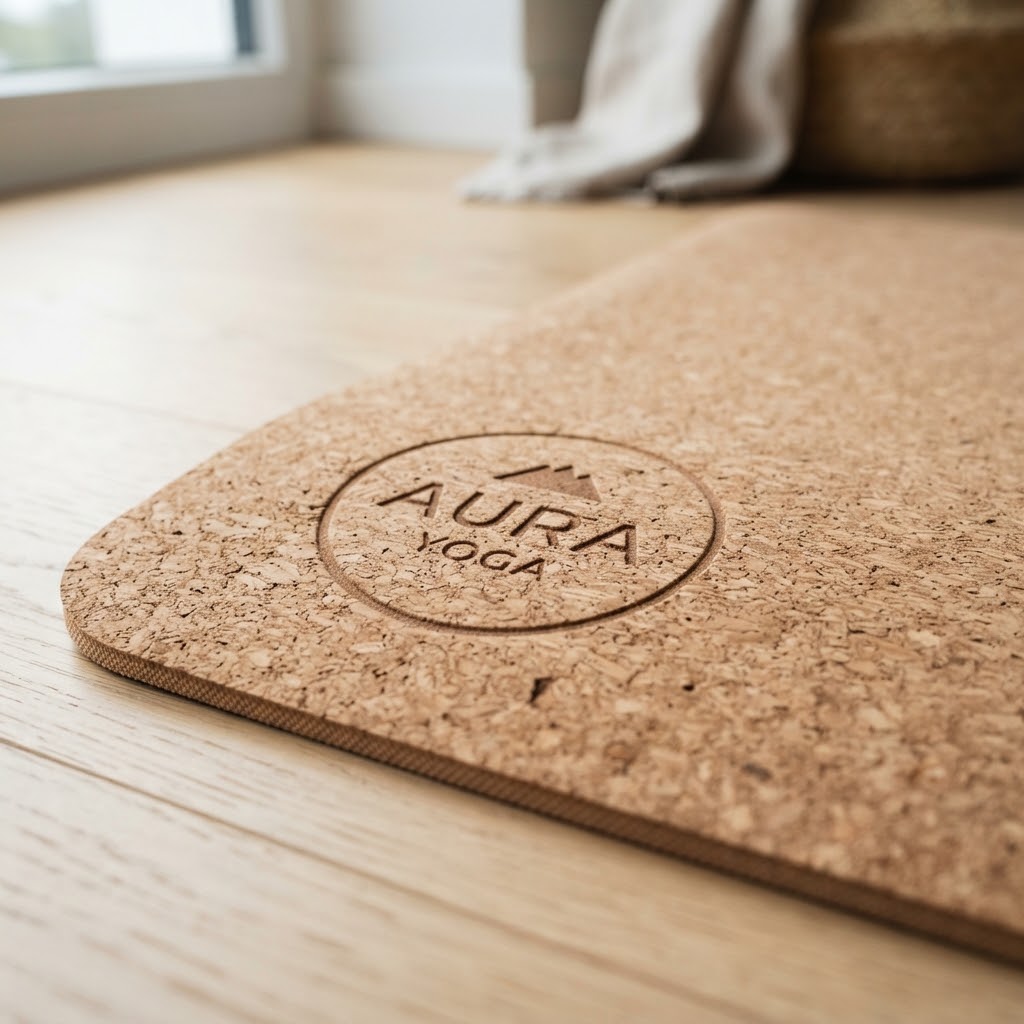
In short: Looking for a sustainable yoga mat leads you to natural materials: cork (best grip when you perspire, harvested without felling trees) or natural rubber (lots of cushioning, but heavier and with an initial smell). PVC is cheap and hard-wearing, but made from fossil resources and barely recyclable.
Cork: natural grip that grows with your session
Cork is harvested by peeling the bark from the cork oak — the tree stays standing and the bark grows back. The result is a renewable material that’s naturally antibacterial. Cork’s unique trait: the grip improves the damper your hands become. To be fair: on a cork mat with dry hands the grip is a touch smoother at first than on rubber; after a few minutes of warming up that difference disappears.
Natural rubber: cushioning, with a few caveats
Natural rubber comes from the rubber tree and is likewise renewable. It gives plenty of cushioning and immediate grip. Downsides: rubber mats are relatively heavy, have a pronounced smell especially at first, and aren’t suitable for people with a latex allergy. Many of our mats therefore combine a cork top layer with a thin rubber base: the grip and hygiene of cork, the floor-grip of rubber.
PVC: cheap, but the loser on the environment
The classic gym mat is usually PVC. Upsides: light, cheap and hard-wearing. That’s where it ends: PVC is made from fossil resources, often contains plasticisers, and is barely recyclable at the end of its life. If you use your mat for a few years and care about sustainability, you’re better off investing a little more in a natural material.
Where does cork come from?
Cork is the bark of the cork oak, which grows mainly in Portugal and Spain. Roughly once every nine years the bark is peeled by hand — the tree simply stays standing and grows new bark. A cork oak lasts for generations this way, and cork oak landscapes are valuable habitats too. That makes cork one of the few materials you can keep harvesting without destroying anything. Want to read more about sustainable material choices in general? The Forest Stewardship Council is a good place to start.
Spotting a sustainable yoga mat: four checks before you buy
- Material transparency: does it state exactly which material it is (cork, natural rubber, TPE, PVC)? Vague terms like “eco-foam” with no explanation are a red flag.
- Renewable resource: does the material grow back (cork, natural rubber) or come from fossil sources (PVC, much TPE)?
- Lifespan: the most sustainable mat is the one you use for years. Durability and good care matter more than a green label on a throwaway product.
- End of life: is the mat biodegradable or reusable, or does it inevitably end up as waste?
Choosing a sustainable yoga mat: the comparison at a glance
- Grip when perspiring: cork wins — grip increases with moisture.
- Cushioning: natural rubber wins, with cork-on-rubber a close second.
- Weight/travel: thin cork travel mats and PVC are the lightest.
- Hygiene and smell: cork wins thanks to its natural antibacterial action.
- Environmental impact: cork and natural rubber are renewable; PVC is not.
Our conclusion: for most yogis a cork mat with a natural-rubber base is the sustainable yoga mat with the best mix of grip, comfort and lifespan. Browse the full yoga mat collection or read which thickness and size suit you. Already have a cork mat? Here’s how to keep it beautiful for years.
Frequently asked questions about mat materials
Is a cork yoga mat really more sustainable than PVC?
Yes. Cork is harvested without felling the tree and is biodegradable; PVC is made from fossil resources and is barely recyclable.
Does a natural-rubber mat smell?
New natural-rubber mats often have a distinctive smell that largely fades after a few weeks. Cork doesn't have this.
What's the best yoga mat for sweaty hands?
Cork. Where most materials get slippery with moisture, cork's grip actually increases the damper your hands become.
Is a sustainable yoga mat more expensive?
Often slightly more to buy, but thanks to the longer lifespan you're usually better off per year than with a cheap mat you replace every year or two.
How do I dispose of an old yoga mat?
Give it a second life as an underlay, boot mat or garden-kneeler. When it's truly finished, a PVC mat goes in general waste (not with plastic packaging); cork and natural rubber can often go with reusable materials at recycling points.