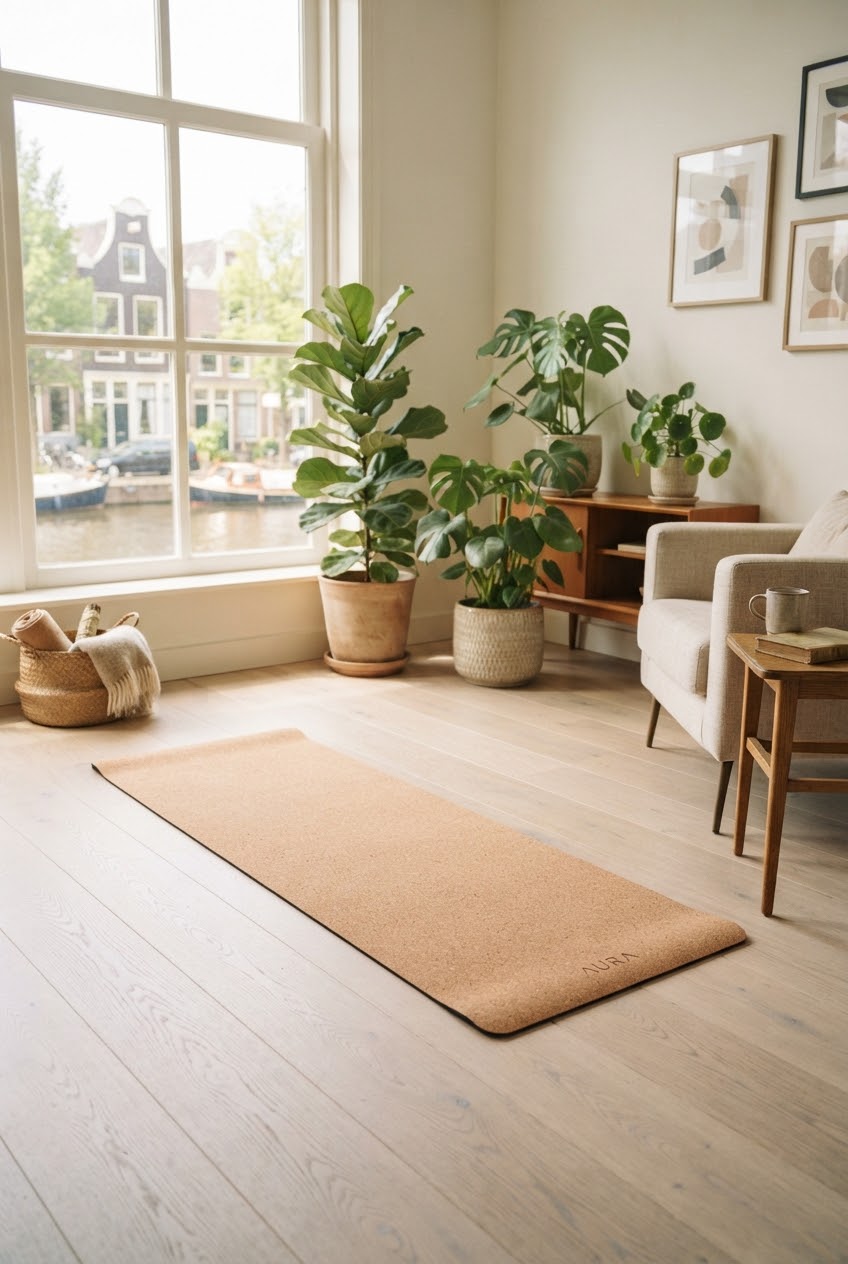
In short: Choosing a yoga mat comes down to three things: thickness (4–5 mm is the best balance of cushioning and stability for most yogis), size (pick a mat at least as long as you are) and material (cork grips better the damper your hands become, and is a natural choice).
1. Thickness: cushioning or stability?
The thicker the mat, the more cushioning — but also the less stable you feel in balancing poses. Rules of thumb:
- 1.5–3 mm (travel mat): light and foldable, ideal on the go or on top of a studio mat. Less suitable as your only mat on a hard floor.
- 4–5 mm (all-round): the middle ground. Enough cushioning for knees and wrists, enough floor contact for balance. For most people this is the best choice.
- 6 mm and up: lovely for sensitive joints or lots of lying work (yin, restorative). In standing balances you feel the ground a little less.
2. Size: longer than you are
The standard length of around 183 cm suits most people up to about 1.80 m tall. Taller, or want room to move without shifting your mat? Choose an extended mat of 200 cm. Mind the width too: 61 cm is standard, but a few extra centimetres give noticeably more freedom in lying poses.
3. Material: why we choose cork
Cork has a property no other mat material shares: the grip gets better the damper your hands become. Exactly when you need it — halfway through an intense flow — the mat holds you. Cork is also naturally antibacterial and harvested without felling a single tree. Read our material comparison of cork vs rubber vs PVC too.
Choosing a yoga mat by style: a quick picker
- Vinyasa/power yoga: 4–5 mm cork — grip when perspiring is decisive here. Have a look at the Aura Premium cork yoga mat.
- Yin/restorative yoga: 5–6 mm for extra comfort in long-held poses.
- Travelling or heading to the studio: a thin travel mat that folds into your bag.
- Beginners: start all-round with 4–5 mm; you can always refine as your style takes shape.
Choosing a yoga mat for your body
When choosing a yoga mat, your body matters as much as your style. Three things to be honest about:
- Sensitive knees or wrists: choose 5–6 mm, or fold a yoga towel under your knee in kneeling poses — so you don’t have to size the whole mat around one pressure point.
- Height: if you’re taller than 1.80 m, go straight for the extended 200 cm size. A mat that’s too short is something you correct every single session — you never get used to it.
- Weight to carry: a heavier mat lies more stably and slides less, but it’s less easy to carry to class. If you practise mainly at home, weight is no obstacle.
Factoring in care and lifespan
A good mat lasts for years with normal use — provided you treat it well. Cork has an edge here: it’s naturally antibacterial and asks for little more than a damp cloth. How to go about it is in our guide on cleaning a cork yoga mat. Do factor ease of care into your choice: a mat that’s easy to keep clean is one you’ll use more often.
Torn between two options? Choosing a yoga mat stays partly personal: see the full range in our yoga mat collection — and remember you have 14-day returns with us, so you can calmly feel at home what suits you.
Frequently asked questions about choosing a yoga mat
Is a thicker yoga mat always better?
No. More cushioning means less stability in standing and balancing poses. For most yogis 4–5 mm is the best balance; only go thicker for sensitive joints or lots of lying work.
Which size yoga mat do I need?
Choose a mat at least as long as your height. The standard of around 183 cm suits up to about 1.80 m; above that an extended 200 cm mat is more comfortable.
Why a cork yoga mat?
Cork grips better the damper your hands become, is naturally antibacterial and is harvested without felling trees — the bark simply grows back.
How long does a yoga mat last?
With normal use and good care, a quality mat lasts several years. Cork is hard-wearing and stays fresh; replace your mat only when the grip noticeably drops or the edges crumble.
Is a thin travel mat enough as my only mat?
On a soft surface (carpet, grass) that can work fine. On a hard floor you'll miss cushioning for knees and wrists — then 4–5 mm as your home base is more comfortable, keeping the travel mat for the road.